Better Shovels
March 2026"Que el mundo fue y será una porquería, ya lo sé. En el quinientos seis y en el dos mil también."
— Enrique Santos Discépolo, Cambalache (1934)
In 1934, Discépolo wrote that the world was and always will be a mess. A cambalache where the Bible sits next to a water heater, where nothing holds its proper value anymore. The tango was banned by multiple dictatorships. And yet, almost a century later, we look back with nostalgia.
Every generation thinks the world is falling apart. And every generation is partially right: their world is falling apart.
I think ours is falling apart right now.
I'm a programmer. Or at least that's what I've been for the last years. Before it was a job, it was a hobby. Something I did because it was fun, because building things with code felt like a small act of creation. Now the thing I do is being automated, and the industry's response has been... interesting.
We're building better shovels.
Here's what I mean. We all know, on some level, that AI is not here to make us faster programmers (applies essentially to any other job too). It's here to replace the need for programmers in many of the things we do today. We know this. And yet, almost everything being built right now is designed to put a human in the middle and to "enhance" us, to make us "100x engineers", "chads", to give us superpowers. Copilots, not autopilots.
It's as if we already dug our own grave and, instead of building the smart automatic mechanical shovel and laying down, we keep making more powerful manual shovels. We know we're not needed in the middle. But we keep building as if we are.
Look at how we're designing AI agent systems: we give them task boards, sprint cycles, code reviews, proof-of-work documentation. We're literally recreating the human organization structures we invented because humans need coordination, context boundaries, and accountability. And imposing them on machines that have none of those constraints. It's the equivalent of designing the first car with a slot for the horse.
Some people are starting to name this tension. Facu Olano (a legend at my company) wrote about how making developers faster without reorganizing everything else just creates new bottlenecks. Amdahl's Law applied to vibes. He also wrote about how AI turns us all into tactical tornadoes, churning out code without the strategic thinking that makes software sustainable. Juani, a great friend of mine and a very intelligent person, described the feeling of chasing taillights: the anxiety of running after a technology that's always one step ahead, while knowing that the hard part of what we do "was never the typing".
I agree with both of them. These are all symptoms of the same thing. We know where this is going, but we don't have the social imagination to embrace it. So we keep building faster shovels and pretending the goal is still digging.
This probably isn't the catastrophe we feel it is. It is an ending, but endings have been happening forever.
In 1930, four years before Discépolo wrote Cambalache, John Maynard Keynes published a short essay called Economic Possibilities for our Grandchildren. Writing during the Great Depression, arguably a worse moment of uncertainty than ours, he made a prediction: by 2030, technology and compound interest would solve what he called the economic problem. Humanity would have enough. And then, for the first time in history, we'd face our real, permanent problem:
How to live wisely and agreeably and well.
He imagined 15-hour work weeks. People freed from economic anxiety, dedicating their time to culture, relationships, and what he called "the art of life itself." He was right about the productivity, we are wealthier compared to 1930. But we never made the shift. Instead of learning how to live, we invented new ways to stay busy. New shovels. Bigger graves.
Byung-Chul Han calls this the burnout society: a world where the exhaustion isn't imposed from outside but self-inflicted. We are "achievement-subjects" who exploit ourselves, who feel guilty for resting, who optimize our leisure time as if it were another sprint. The antidote, Han argues, isn't a better tool. It's stopping. What he calls the vita contemplativa. The contemplative life as resistance.
AI is Keynes' prediction arriving, specifically for knowledge work. The economic problem of software: "how do we produce enough code?" is being solved. And we're responding exactly how he feared: not by asking "how do we live better?" but by finding new ways to stay on the treadmill. Nowadays everyone (myself included) is doing the same side project.
I don't think this is the end. I agree with probably most people and disagree with a few loud accelerationists. That this transition won't be painless. But I also don't think it's the apocalypse. It's a cambalache. It's messy, disorienting, and the old values don't hold their shape anymore.
To me, the real question is not "how do we stay productive?" It's: what do humans do when they're no longer the bottleneck? What does a society look like when it's organized around living rather than producing?
If you've seen WALL-E, you know one version of the answer. Humanity automated everything, lost purpose, became passive consumers on screens. But the ending isn't dystopian, it's the humans learning to plant things again, to touch dirt, to hold hands. The robots did the work so they could rediscover what mattered.
This year I decided to do one argentinian asado a week.
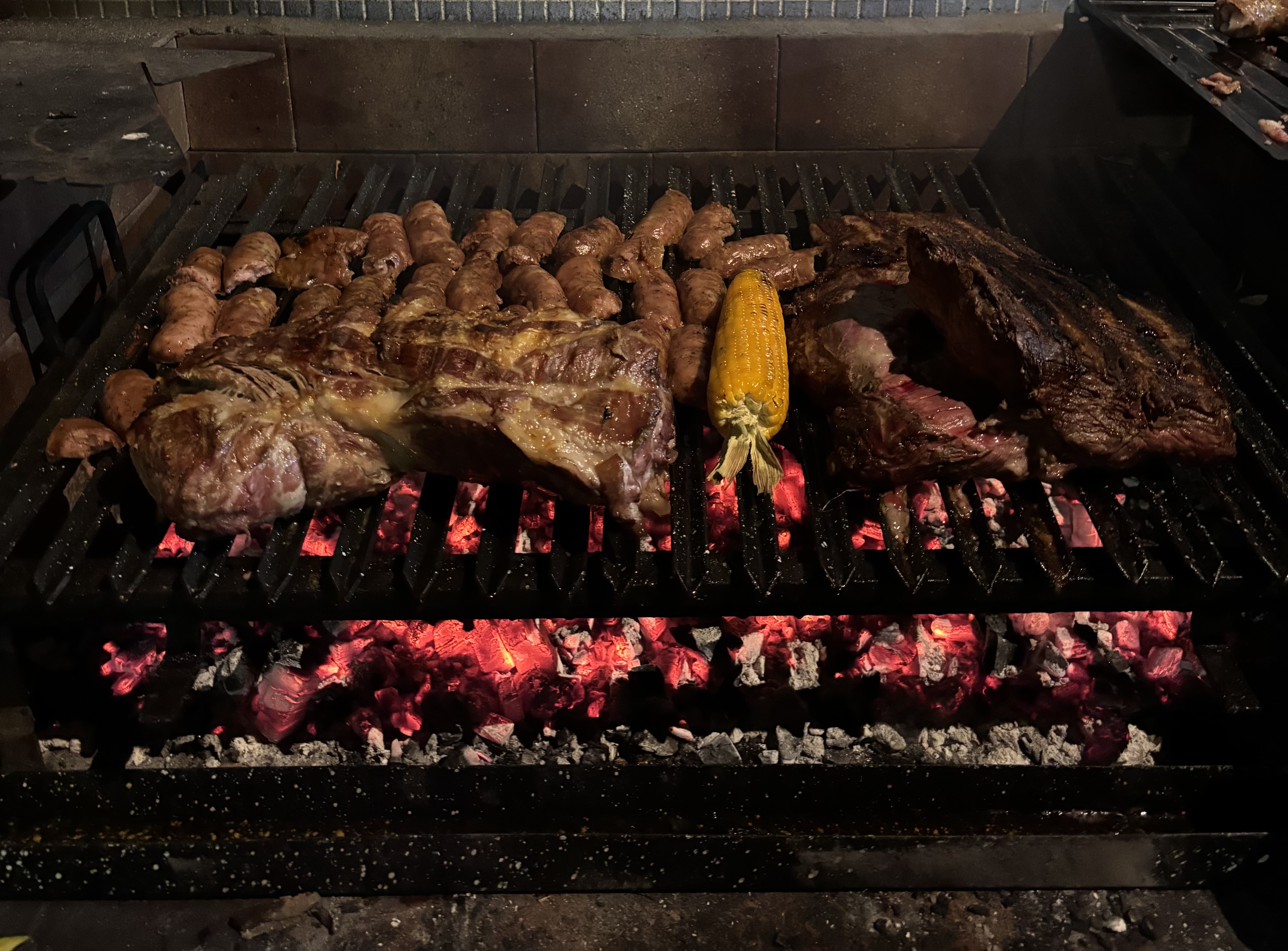
An asado takes hours. You build a fire, you wait for the embers, you cook slowly, you eat slowly. You cannot optimize it. You cannot automate it. The hours are the point. It's not a meal but the practice of patience, shared with the people I love.
I also picked up analog photography. Another beautifully inefficient thing. You get 36 shots on a roll. You can't review them instantly. You have to wait, and think, and be present with what you're seeing. In a world that's accelerating, choosing the slow thing feels almost radical.
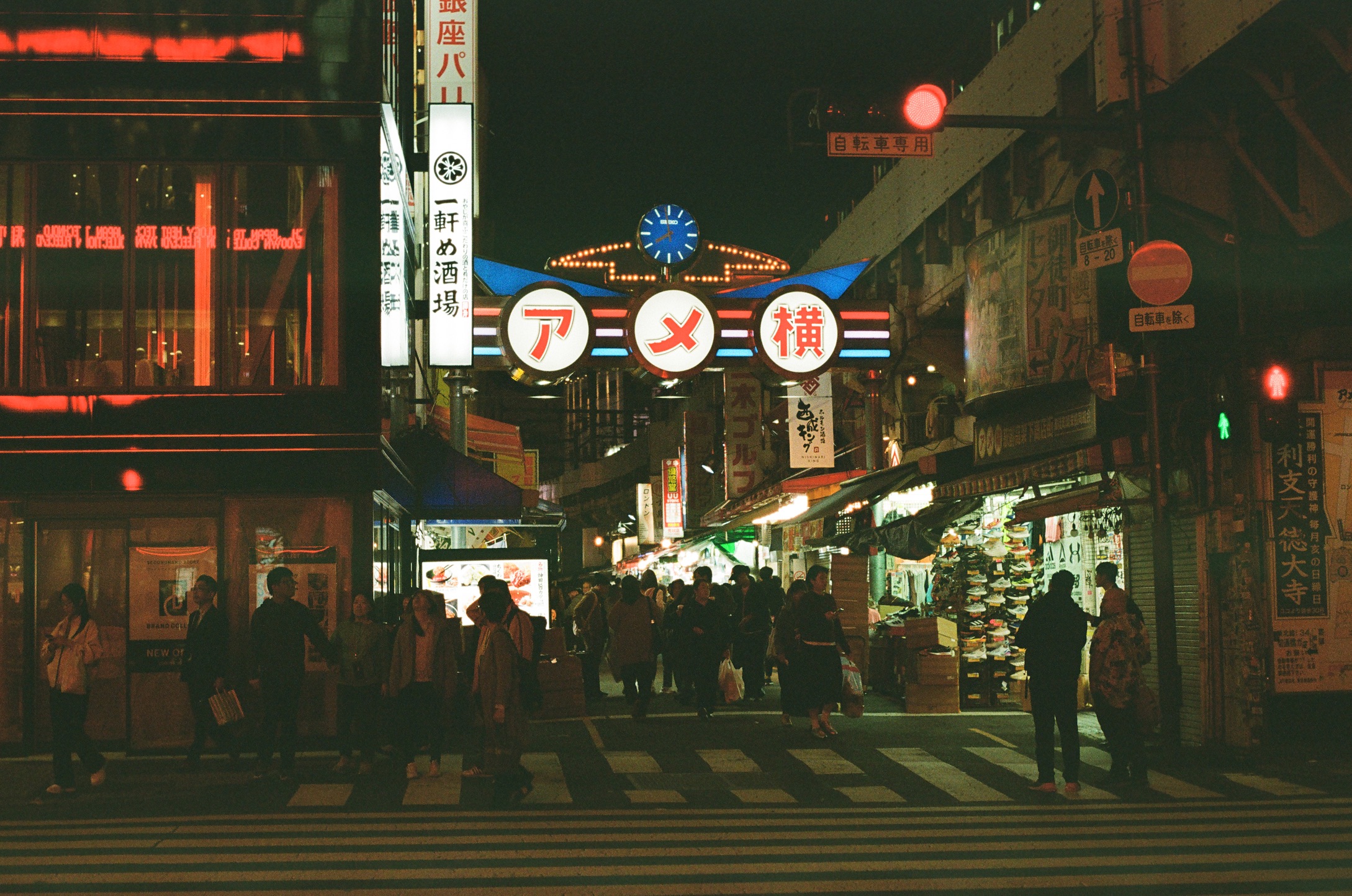
These aren't coping mechanisms. I think they're the answer (or at least my answer) to the question this whole transition raises. The tech world keeps asking "what will humans produce?" But maybe the right question is: "what will humans experience?"
Being with my loved ones, cooking for them, making something with my hands, watching the fire with nowhere to be. These things are valuable precisely because they're inefficient. They can't be compressed, delegated, or scaled. They require my full, irreplaceable presence. Not because of what I produce (though I think that I'm a pretty good asador), but because of who I am to the people at the table.
That's what Keynes meant by "the art of life itself". Not hobbies as self-improvement. Not optimized leisure. Just being present with the people who matter.
I'm mostly a positive person, despite knowing that the world is a rather negative place. But I think there have been very few generations, maybe none, that truly loved their time while they were living it. Discépolo thought 1934 was unbearable. We think it was romantic.
The world was and will be a mess. The question isn't whether it's messy, it always is. The question is whether we design the next mess intentionally, or just build faster shovels and hope for the best.
I choose the fire. The slow meal. The people around the table. Not because I've given up on the future, but because I think that is the future.
My words were inspired by the following:
- Keynes, Economic Possibilities for our Grandchildren
- Byung-Chul Han, The Burnout Society
- WALL-E (goated movie IMO)
- Discépolo, Cambalache
- Facundo Olano, dangerously-skip-reading-code
- Facundo Olano, Tactical Tornado is the New Default
- Juan Rigada, Chasing Taillights